Have you ever experienced fogging on your watch face when entering or exiting air-conditioned places? Or perhaps it suddenly rained, and you later found water inside your watch? Or maybe water vapor appeared on your watch after washing your hands! Many people have probably experienced these situations. This is often because the watch's water resistance is not suitable for your usage, or due to aging watch straps, the waterproof gaskets have deteriorated or corroded due to sweat, which can reduce the water resistance of waterproof watches. There are many waterproof ratings for watches on the market, such as daily water resistance, 5ATM, 200 meters. What do they all mean? Let's understand watch water resistance ratings and how to choose the right waterproof watch for you!
Understanding Watch Water Resistance Ratings
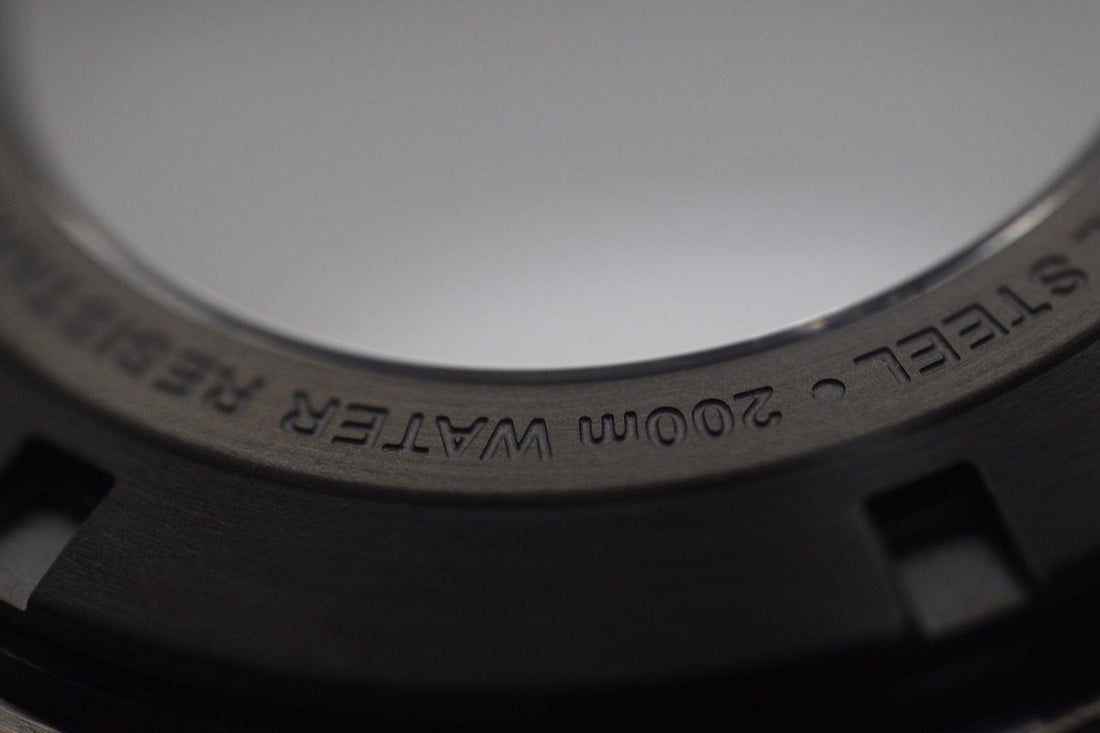
If you wear a watch or plan to buy one, you can check the back of the watch to find its water resistance rating, such as "WATER RESISTANT" or "WATER PROOF," or "5ATM/ 5BAR/ 50m." This indicates the watch's water resistance rating.
Does 50-meter water resistance mean you can swim 50 meters deep? Who would swim 50 meters deep anyway?
What do these water resistance ratings like meters/BAR/ATM actually mean? The following content involves some physics, so please take it with a grain of salt. For every 10 meters deeper underwater, the pressure increases by 1 atmosphere. The standard atmospheric pressure unit is atm, and 1 atm is equal to the pressure at 10 meters water depth. Another unit for atmospheric pressure is BAR.
When a watch is at sea level, the air inside it is approximately at standard atmospheric pressure (1 atm). However, when the watch is at a depth of 30 meters underwater, the water pressure is 3 atm. When there is a pressure difference between the inside and outside of the watch, the watch case can easily burst. Generally, watch manufacturers test the watch's waterproof function using "pressure values" and indicate the waterproof depth (meters) using pressure resistance values (BAR/ATM). Therefore, a 50-meter waterproof watch means its pressure resistance value is equivalent to the water pressure at a depth of 50 meters under standard conditions, not that it can actually be used for swimming 50 meters deep, as few people would go that deep.
Which watch water resistance rating is suitable for me?
When choosing a watch, you can select different water resistance ratings according to your needs.
3ATM (3BAR/30 meters) water resistance: Also known as daily water resistance, it means it is suitable for everyday use and can only resist small splashes from hand washing and rain. It should not be submerged in water.
5ATM (5BAR/50 meters) water resistance: Means it can withstand splashes from hand washing and rain, but not for diving or snorkeling. >View 50-meter waterproof watches
10ATM (10BAR/100 meters) water resistance: Means it is suitable for swimming and snorkeling.
20ATM (20BAR/200 meters) water resistance: Means it is suitable for high-impact water sports such as wake surfing, stand-up paddleboarding, and some diving activities like scuba diving, which have been popular in recent years. >View 200-meter dive watches

Watchmake Factory 200-meter dive watches, suitable for water sports enthusiasts.
What else should I pay attention to?
In addition to choosing the appropriate water resistance rating when purchasing a watch, maintaining it is also very important! For example, avoid hot springs, steam baths, and saunas, as drastic temperature changes can cause the watch crystal to expand and contract, creating gaps with the watch case. No waterproof watch should have its buttons operated or crown adjusted while in water! Furthermore, the aging of waterproof gaskets can affect the watch's water resistance, so waterproof gaskets should be replaced regularly depending on usage. You can refer to the watch's water resistance rating to properly maintain your watch.
Further Reading / Recommended Purchases